Why Liquidation Matters to Stakeholders
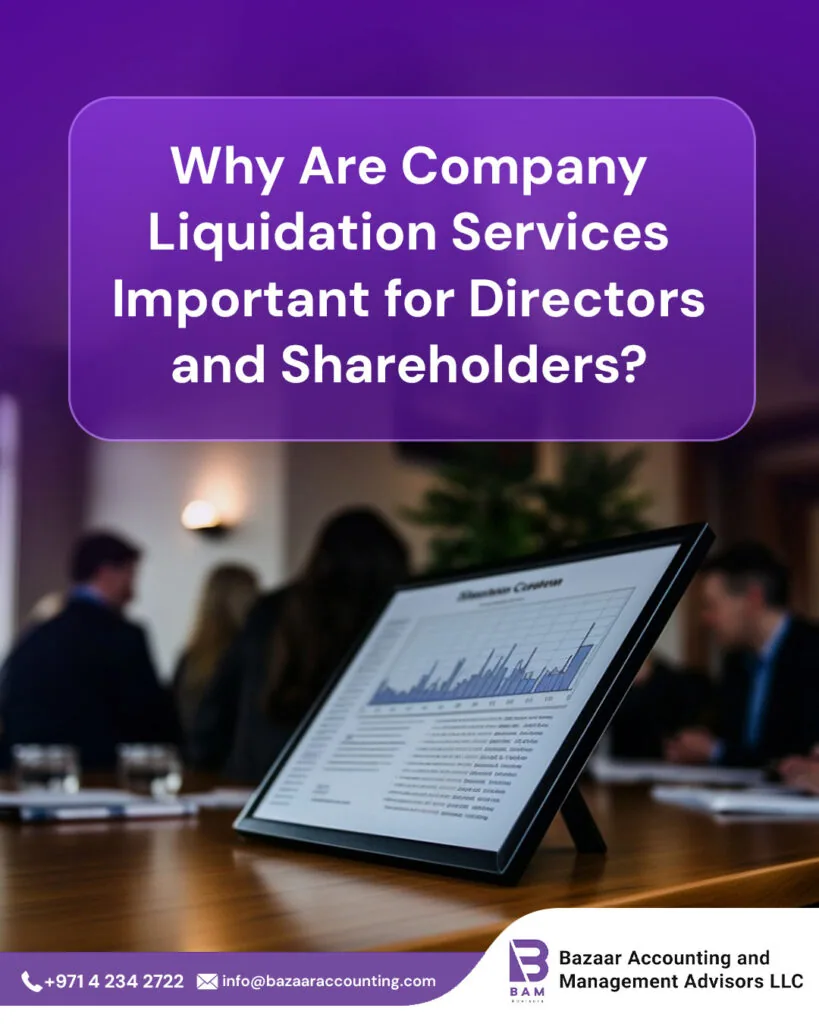
Closing a business is never just about shutting the doors—it’s about protecting directors, shareholders, and employees from legal and financial risks. In Dubai, the liquidation process involves more than ending operations: it requires settling debts, clearing government obligations, and distributing assets with complete transparency.
That’s where company liquidation services Dubai play a vital role. Licensed liquidators provide the expertise and documentation needed to avoid penalties, ensuring directors can exit responsibly while shareholders receive clarity on asset distribution.
What Is the Liquidation Process in UAE?
The liquidation process in UAE is the formal winding-up of a business, including:
- Settling outstanding debts and liabilities.
- Preparing and submitting liquidation reports.
- Securing clearance certificates from authorities like the Department of Economic Development (DED), the Ministry of Human Resources, and free zone regulators.
- Cancelling the company’s trade license and bank accounts.
Handled correctly, the process shields directors from personal liability and ensures compliance with all regulatory requirements.
Voluntary vs. Compulsory Liquidation
- Voluntary liquidation: Initiated by directors or shareholders, often due to financial restructuring, declining profitability, or strategic changes. It allows businesses to control the pace and outcome of closure.
- Compulsory liquidation: Ordered by a UAE court, usually because of insolvency or unpaid debts. This is less favorable as it often prioritizes creditor recovery over stakeholder interests.
Understanding which path applies is essential for directors planning their exit.
The Role of Licensed Liquidators
Approved liquidators are the backbone of a compliant closure. Their responsibilities include:
- Auditing company accounts and preparing a liquidation report.
- Coordinating with government bodies for clearances.
- Managing creditor settlements and documenting payments.
- Securing a cancellation certificate to confirm that the business is dissolved.
For directors, this professional oversight minimizes risks, while shareholders gain assurance that asset distribution is fair and properly recorded.
Key Steps in Liquidating a Company in Dubai
- Board Resolution – Shareholders and directors pass a resolution to liquidate the company.
- Appoint a Licensed Liquidator – A professional is formally engaged to manage the process.
- Public Notice – A liquidation notice is published, giving creditors a fixed period (usually 45 days) to file claims.
- Debt Settlement – Liabilities to banks, suppliers, and employees are cleared.
- Government Clearances – All approvals are obtained from DED, Ministry of Human Resources, and (if relevant) free zone authorities.
- Final Liquidation Report – The liquidator submits documentation to the authorities.
- License Cancellation – The trade license is officially cancelled, marking the end of the business entity.
Financial & Legal Implications
- For Directors: Failure to comply exposes them to legal liability, fines, or even personal asset risks in cases involving guarantees.
- For Shareholders: Proper liquidation ensures that remaining assets are distributed fairly and prevents disputes.
- For Employees: UAE labor law mandates full payment of gratuities, final wages, and entitlements—compliance here is non-negotiable.
Risks of Improper Liquidation
Improper handling of liquidation can lead to:
- Rejected cancellation requests by authorities.
- Prolonged legal disputes with creditors.
- Heavy penalties for non-compliance with UAE regulations.
Professional oversight ensures these risks are avoided, offering directors peace of mind and shareholders full transparency.
Why Hire Professional Company Liquidation Services in Dubai?
Engaging expert support saves time, reduces stress, and ensures every step is legally compliant. A trusted partner like Bazaar Accounting:
- Prepares accurate liquidation reports.
- Liaises directly with government authorities.
- Safeguards directors from liability exposure.
- Ensures employees and creditors are treated fairly.
This comprehensive approach transforms a complex, high-stakes process into a manageable and transparent transition.
Conclusion
For directors and shareholders, liquidation is not just a formality—it’s a legal safeguard. Choosing professional company liquidation services Dubai ensures compliance with the liquidation process in UAE, protects stakeholders, and provides clarity during an otherwise difficult phase.
Whether your company is closing voluntarily or under compulsion, the right expertise ensures your exit is structured, lawful, and secure.