Dubai’s business landscape continues to attract entrepreneurs and investors from across the globe. With its tax-friendly regime, 100% foreign ownership policies, and robust infrastructure, setting up a company here offers unparalleled potential.
However, choosing the right business structure is one of the most important decisions you’ll make during company formation in Dubai. It determines your legal obligations, tax exposure, operational flexibility, and even how you engage with clients or investors.
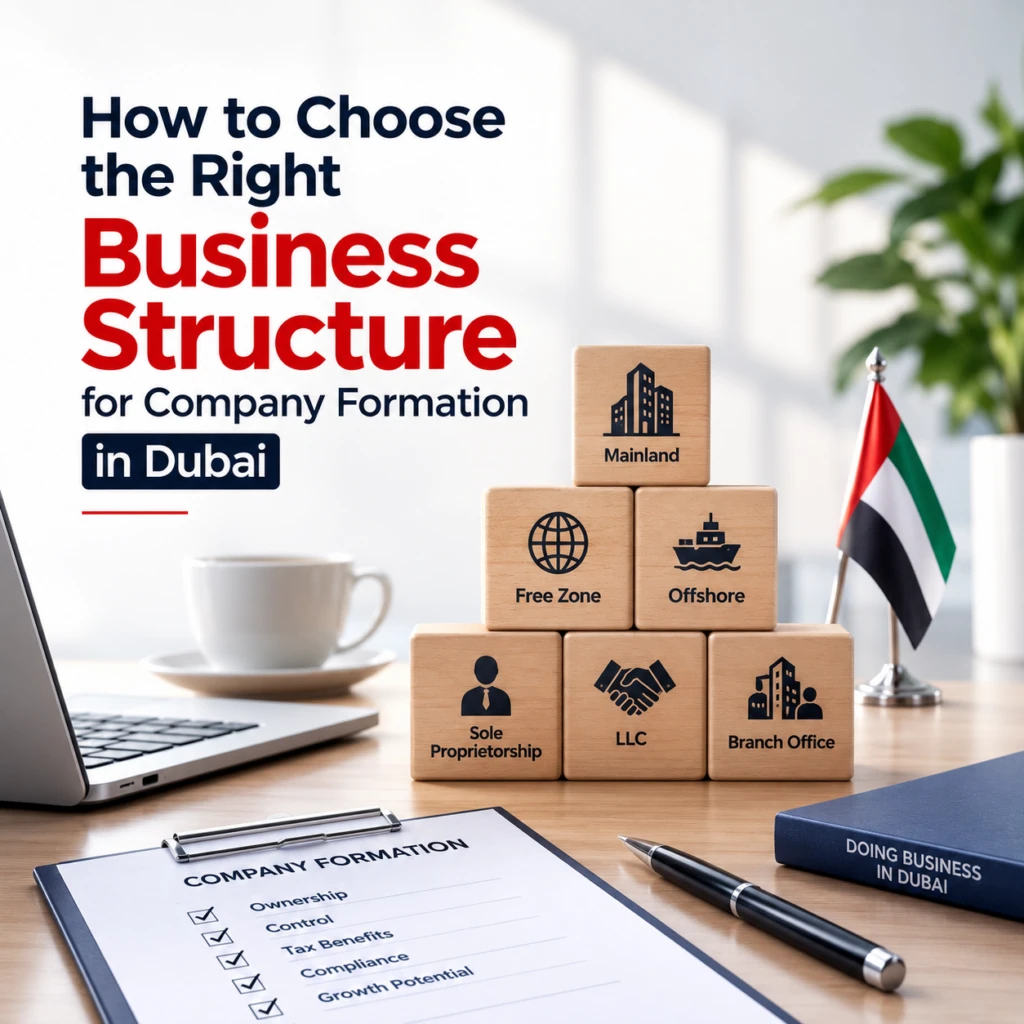
Whether you’re launching a consultancy, trading enterprise, or manufacturing unit, understanding the distinctions between mainland, free zone, and offshore structures ensures your setup aligns with both your business goals and compliance requirements.
Mainland, Free Zone, or Offshore: Understanding Your Options
Dubai offers three primary business jurisdictions, each with distinct advantages.
1. Mainland Company Formation in Dubai
Mainland businesses are licensed by the Department of Economy and Tourism (DET, formerly DED) and can trade freely across the UAE market as well as internationally.
Key Benefits:
- Full access to the UAE’s onshore market and government contracts.
- 100% foreign ownership permitted in most sectors (except strategic activities).
- Unlimited visa eligibility and office location flexibility.
Ideal for:
Companies providing services to UAE clients, retail operations, construction firms, or those seeking to scale across the region.
2. Free Zone Companies
Free zones such as DMCC, JAFZA, DIFC, and Dubai South cater to sector-specific industries with simplified incorporation procedures and customs privileges.
Advantages:
- 100% foreign ownership.
- Exemption from import/export duties.
- Easy repatriation of capital and profits.
- Streamlined licensing under a single authority.
Limitations:
Free zone companies cannot trade directly with the mainland without appointing a local distributor or obtaining a dual license.
Best for:
Consulting, logistics, technology, and international trading firms seeking operational ease and global connectivity.
3. Offshore Companies
Offshore entities are ideal for holding assets, intellectual property, or conducting international transactions without local office requirements.
Benefits:
- Zero taxation and minimal reporting obligations.
- Protection of shareholder identity and financial privacy.
- Suitable for global structuring, not onshore trade.
- Popular jurisdictions: JAFZA Offshore and RAK ICC.
Legal Structures Available Under Each Jurisdiction
Dubai recognizes several legal formats that define ownership, liability, and capital structure:
Sole Establishment – Owned by a single individual; suitable for freelancers and consultants.
Limited Liability Company (LLC) – Most common for mainland company formation in Dubai; offers shared ownership and liability limited to invested capital.
Civil Company – Typically for professionals like accountants, doctors, and engineers.
Branch or Representative Office – For foreign companies expanding into the UAE market.
Free Zone Entity (FZE / FZCO) – For single or multiple shareholders operating within a free zone.
Your ideal legal form depends on your industry, ownership requirements, and expansion goals.
Key Considerations When Choosing a Business Structure
1. Target Market and Client Base
If your primary market is the UAE mainland, a mainland license is essential. Conversely, if your clients are international, a free zone setup may suffice.
2. Ownership and Control
Since the 2021 reforms, most sectors now permit 100% foreign ownership under a mainland license, reducing the need for local sponsorship.
3. Taxation and Compliance
Corporate tax (9% for profits above AED 375,000) applies to both mainland and free zone companies, but exemptions exist for qualifying free zones under specific conditions. Your accounting advisor can help determine compliance obligations based on your structure.
4. Cost and Operational Flexibility
Free zone setups may appear cost-effective initially, but can limit your market reach. Mainland structures require more documentation but provide long-term scalability and credibility when dealing with larger UAE clients.
How Accounting and Advisory Firms Simplify the Process
Setting up a company involves multiple steps, from name reservation and initial approval to licensing, visas, and banking. Partnering with a trusted accounting and advisory firm ensures that your business structure is optimized not just for registration, but for sustainability.
- Professional advisors assist with:
- Comparing jurisdiction benefits and setup costs.
- Preparing Memorandum of Association (MOA) and compliance documentation.
- VAT registration and corporate tax advisory.
- Ongoing bookkeeping and renewal services.
Choosing experts who specialize in company formation in Dubai ensures that you meet all legal obligations while positioning your firm for growth.
Conclusion: Structure Smart, Scale Strong
Dubai’s regulatory reforms have opened the doors for entrepreneurs like never before, but the right structure determines how smoothly your business will operate and grow.
Whether opting for a mainland company formation in Dubai or setting up in a free zone, aligning with a professional advisory partner helps you make decisions backed by compliance, clarity, and long-term vision.
Start right. Build on a structure that supports your goals, not limits them.
FAQs
- What’s the difference between a mainland and a free zone company in Dubai?
Mainland companies can trade anywhere in the UAE and bid for government contracts, while free zone companies are restricted to operations within their zone or international markets.
- Can foreigners own 100% of a mainland company in Dubai?
Yes. Following the UAE’s updated Commercial Companies Law, 100% foreign ownership is now allowed in most sectors.
- How long does company formation in Dubai take?
Depending on the jurisdiction and activity type, company registration typically takes 5 to 10 working days.
- Is an office space mandatory for company setup?
Yes. Mainland setups require physical office space, while free zones may offer flexi-desk or shared office options.
- What taxes apply to companies in Dubai?
Corporate tax at 9% applies to most companies earning above AED 375,000 in annual profits, with exemptions for qualifying free zone entities.