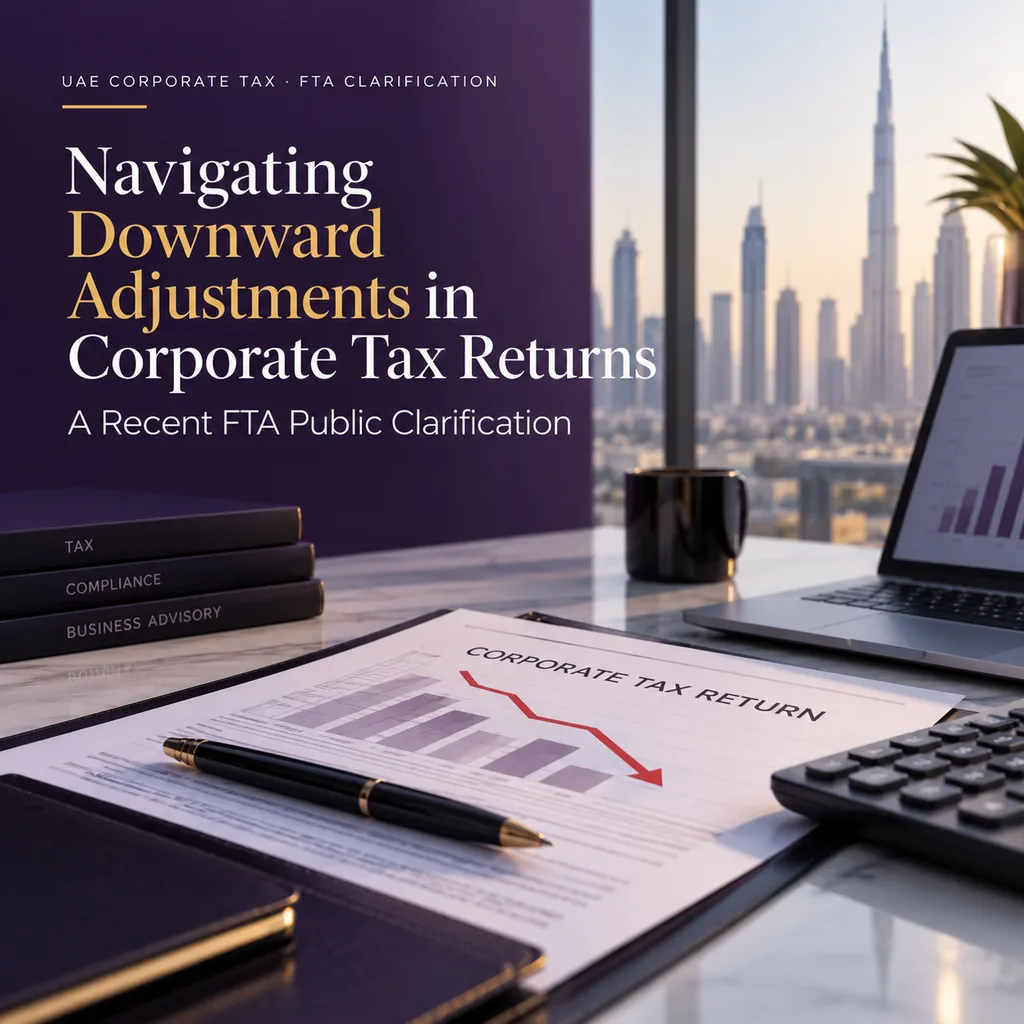
In an increasingly complex tax landscape, the recent guidance from the Federal Tax Authority (FTA) on downward adjustments in corporate tax returns has brought critical insights for businesses. Understanding and implementing these clarifications is not just about compliance; it’s also essential for minimizing tax risks during potential audits.
Key Insights from the FTA Clarification:
- Emphasis on the Arm’s Length Principle: The FTA reiterates that all transactions involving related parties must adhere to the arm’s length standard. This principle ensures that pricing reflects true market conditions, which is crucial for fair taxation.
- Self-Assessment is Crucial: Taxable entities have the authority - and obligation - to self-assess the necessity of adjustments related to related-party transactions. CTP011 clarifies that prior FTA approval is not required, allowing for a more autonomous and responsive approach to compliance.
- Mandatory Disclosure of Downward Adjustments: It’s vital to note that any downward adjustments must be prominently disclosed in tax returns, regardless of the value or nature of the affected transaction. This requirement emphasizes the importance of robust documentation practices and transparent accounting.
- Robust Supporting Documentation: Robust supporting evidence is key to substantiating any pricing adjustments. Companies should prepare detailed analyses, such as benchmarking studies, as it is specifically identified as part of the supporting analysis expected by the clarification. This is to validate that their pricing aligns with the arm’s length principle and justifies any downward adjustments.
Strategic Insights for Businesses:
- Audit Readiness: The tax landscape is fraught with uncertainties, and potential audits can uncover discrepancies that lead to costly ramifications. By being proactive in documenting and aligning with the arm’s length principle, businesses can strengthen their position in the event of an FTA review or audit.
- Enhancing Transparency: By actively engaging in proper documentation and rationale for tax adjustments, businesses not only fulfill regulatory requirements but also build trust with stakeholders and regulators.
- Positioning for Success: In today’s environment, companies that embrace stringent tax practices are better positioned as industry leaders. A commitment to best practices can attract clients who value compliance and transparency.
- Alignment with Best Practices: This clarification serves as a timely reminder to revisit internal policies and ensure alignment with best practices in corporate governance and tax compliance.
With the deadline for most corporate tax returns fast approaching at the end of September, this clarification is a game-changer for taxpayers. Now is the perfect time to dive into your related party transactions, identify any necessary transfer pricing adjustments, and ensure your documentation and disclosures are fully aligned with UAE regulations.